


Skyrim Looks Wild With DLSS 5 at Maximum Settings
The Elder Scrolls V: Skyrim is one of the most heavily modded games ever made, but a new experiment with NVIDIA's DLSS 5 technology is producing visuals that look very different from the classic Bethesda RPG.
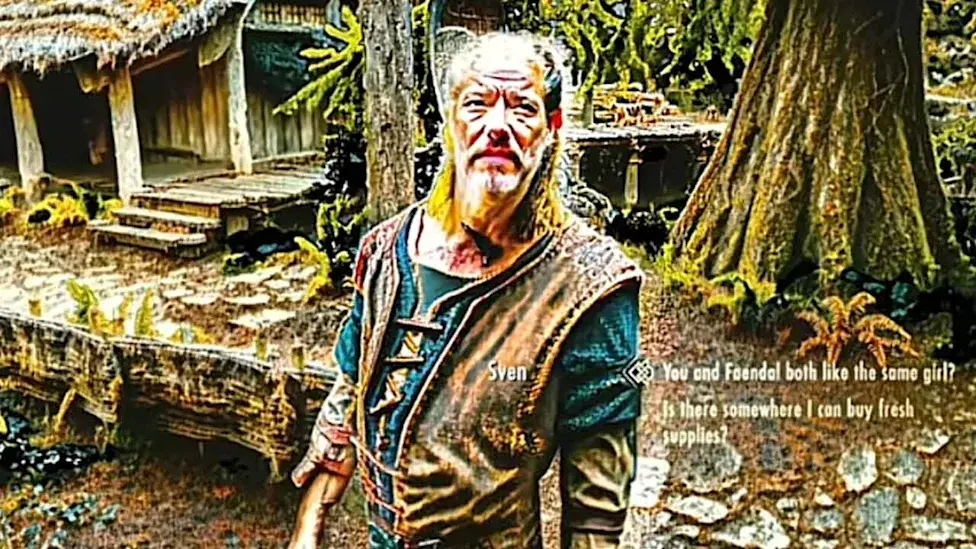
A demonstration using DLSS 5 at maximum settings shows just how aggressively NVIDIA's new AI-powered rendering technology can alter the appearance of an older game. While DLSS 5 is designed to improve lighting, materials and visual realism, pushing its settings to the extreme can produce results that are far removed from Skyrim's original visual style.
What Is DLSS 5?
NVIDIA introduced DLSS 5 as a new generation of neural rendering technology. Unlike traditional image upscaling, DLSS 5 uses an AI model trained to understand elements such as characters, hair, skin, clothing and environmental lighting.
The technology then generates additional visual detail and lighting effects in real time.
NVIDIA says DLSS 5 can deliver photorealistic lighting and materials while operating at resolutions up to 4K. Developers also receive controls for adjusting intensity, color grading and masking so they can determine how the effect is applied to a game.
Skyrim Gets the DLSS 5 Treatment
Skyrim wasn't originally designed around this kind of neural rendering technology. As a result, applying DLSS 5 through unofficial modifications can create some unusual visual results.
At moderate settings, the technology can make certain elements appear more detailed and realistic. But when users push the available settings to their maximum, the result can become dramatically different.
Characters can appear more heavily processed, while lighting and surface details may become exaggerated. The transformation has led some observers to describe the result as an overly processed or "deep-fried" version of Skyrim.
The Performance Cost Is Significant
The biggest problem isn't necessarily the visual transformation. Running DLSS 5 at extreme settings can also have a substantial impact on performance.
Reports surrounding unofficial DLSS 5 implementations have shown significant frame-rate drops, particularly when the technology is pushed to aggressive settings. Some tests with modded games have seen performance fall dramatically, while VRAM usage can also increase.
That means players shouldn't expect maximum DLSS 5 settings to automatically deliver a smoother gaming experience.
Instead, users may have to choose between improved visual effects and maintaining a high, stable frame rate.
Why Skyrim Is an Interesting Test
Skyrim is an unusual but useful game for experimenting with new graphics technology.
The game was originally released in 2011, and its visual presentation has been modified extensively through community-created graphics mods. Players have spent years improving textures, lighting, character models and environments.
DLSS 5 provides another way to transform the game's appearance, but it also demonstrates an important limitation of AI-powered graphics technology: more visual processing doesn't necessarily mean better artistic direction.
Skyrim's original art style was deliberately designed by Bethesda's artists. An AI rendering system may produce technically impressive lighting while simultaneously changing the look and feel that made the game recognizable.
NVIDIA Says Developers Control the Technology
NVIDIA has emphasized that DLSS 5 is intended to give developers significant control over how its effects are applied.
The company says developers can adjust intensity, color grading and masking, allowing artists to decide where the neural rendering technology should be used.
Bethesda has also said that its DLSS 5 implementations will remain under the control of its artists and will be optional for players.
That distinction is important because the extreme Skyrim experiment is not necessarily representative of how DLSS 5 will look when properly integrated into a game by its developers.
DLSS 5 Is Already Creating Debate
DLSS 5 has generated considerable discussion among PC gamers because the technology can change more than just image quality.
Some demonstrations have shown AI-generated changes to character faces and other visual elements. Critics argue that these changes can sometimes interfere with the original artistic vision of a game.
Supporters, meanwhile, see DLSS 5 as a major step toward more realistic real-time graphics.
The debate essentially comes down to a question of priorities: should AI rendering reproduce a developer's original artistic choices as closely as possible, or should it be allowed to reinterpret them in pursuit of greater realism?
Skyrim Shows Both Sides of AI Graphics
The Skyrim experiment is a good example of why DLSS 5 is attracting so much attention.
On one hand, the technology can create impressive lighting and material effects in a game that is more than a decade old. On the other hand, pushing the technology too far can produce visuals that many players may find less appealing than the original presentation.
For most gamers, moderate settings and developer-tuned implementations will likely be more useful than simply turning every available option to maximum.
Final Thoughts
DLSS 5 could represent a major evolution in real-time graphics, but the extreme Skyrim experiment shows that more AI processing isn't always better.
When carefully tuned, NVIDIA's neural rendering technology has the potential to make games look significantly more realistic. However, excessive processing can alter character appearances, lighting and the overall artistic identity of a game.
For now, Skyrim with maximum DLSS 5 settings is better viewed as an experiment than a recommended way to play the game. It provides an interesting glimpse at what happens when AI-powered graphics technology is pushed far beyond its intended limits.
اترك تعليقاً
لن يتم نشر عنوان بريدك الإلكتروني. الحقول المطلوبة مشار إليها بـ *