

China Introduces a Giant 13-Foot Humanoid Robot
China is pushing the boundaries of robotics with the introduction of Neo1, a giant humanoid robot designed to handle demanding industrial tasks. Developed by Beijing-based robotics startup NeodraDynamics, the machine stands approximately 13 feet tall and weighs around 1.2 metric tons.
The company claims Neo1 can lift loads weighing up to 500 kilograms, or approximately 1,100 pounds, using both arms. If its capabilities are demonstrated in real-world conditions, the robot could become an interesting development in the growing field of heavy-duty humanoid robotics.
Unlike smaller humanoid robots designed to assist people in factories or homes, Neo1 focuses on strength and demanding working environments. Its proposed applications include mining, industrial material handling, disaster response and other tasks that could put human workers at risk.
However, the company’s performance claims have not yet been independently verified through publicly demonstrated real-world operations.
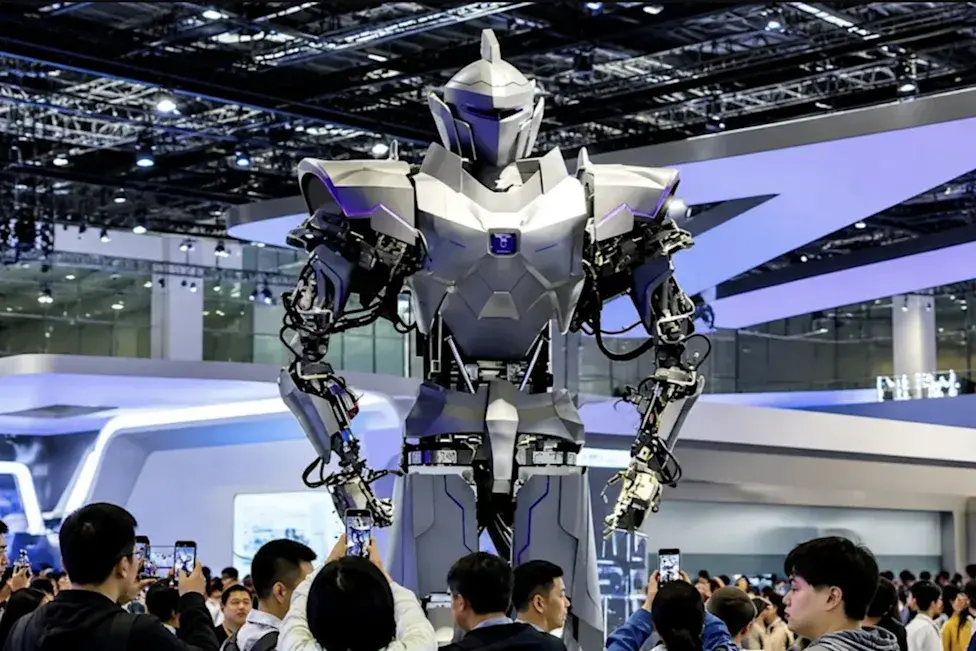
Neo1 Uses Hydraulic Technology for Heavy Lifting
One of Neo1's most distinctive features is its hydraulic-electric hybrid system.
Many modern humanoid robots use electric motors to move their joints. Neo1 takes a different approach by relying primarily on miniature hydraulic actuators, which use pressurized fluid to generate force.
According to NeodraDynamics, 39 of the robot's 41 active joints use hydraulic actuators, while electric drives handle the remaining two joints in its forearms.
This design is intended to deliver substantial force while maintaining controlled movement. The company says the robot can carry a combined load of 500 kilograms with its two arms.
Hydraulic systems are already widely used in heavy machinery, including excavators, industrial equipment and construction vehicles. Applying this technology to a humanoid platform could help robots perform jobs that demand more strength than conventional lightweight machines can provide.
Nevertheless, hydraulic systems also bring challenges, including heat management, fluid leakage, maintenance requirements and control complexity. Neo1 will need to demonstrate reliable performance outside controlled demonstrations before its practical value can be fully assessed.
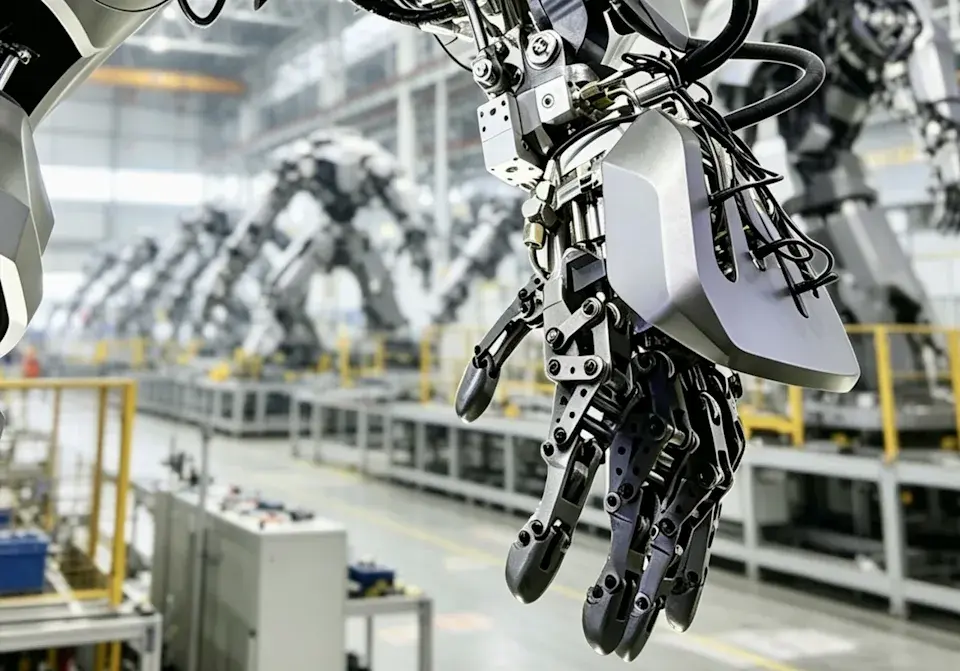
What Could China's Giant Robot Be Used For?
NeodraDynamics envisions Neo1 working in environments where heavy loads, dangerous conditions or difficult access make certain jobs challenging for people.
1. Industrial Material Handling
The robot could potentially help move heavy components and equipment in factories, industrial facilities and ports. Such applications would depend on its ability to lift loads safely and repeat the same tasks reliably.
2. Mining and Disaster Response
Mining operations and disaster zones can expose workers to unstable structures, falling debris and hazardous materials. A suitably equipped robot could assist with clearing debris, moving equipment and supporting operations in dangerous locations.
3. Nuclear Facility Maintenance
The company has also identified nuclear facilities as a potential application. Robots designed for hazardous environments could eventually help with inspections and maintenance in areas where limiting human exposure is important.
However, radiation resistance and suitability for nuclear operations would require appropriate testing and certification.
4. Underwater Engineering
NeodraDynamics has also described possible applications in deep-sea engineering and underwater equipment maintenance. These uses would require the complete system to demonstrate that it can withstand pressure and operate reliably underwater.
For now, these are proposed applications rather than confirmed deployments.
Can Neo1 Perform Precise Tasks as Well as Heavy Lifting?
Strength is not the only capability NeodraDynamics is highlighting.
The company has also advertised precision features intended to support demanding industrial operations. Its published materials describe fine positioning capabilities alongside the robot's high lifting capacity.
Such precision could be useful when assembling heavy components or positioning equipment that requires careful alignment.
However, the company has published different precision figures in separate announcements, and the available information does not establish how the complete robot performs under independent testing. Its actual accuracy, reliability and ability to repeat delicate tasks will need further demonstration.
The important question is not simply whether Neo1 can generate enormous force, but whether it can combine that force with consistent, safe and controlled movement.
How Does Neo1 Compare With Tesla Optimus?
Neo1 and Tesla's Optimus humanoid robot represent different approaches to robotics.
Tesla is developing Optimus primarily for tasks that could be performed in factories and, eventually, other everyday environments. Its broader ambition is to create a versatile robot capable of carrying out a range of human-oriented tasks.
Neo1, by comparison, is designed around heavy lifting and demanding industrial work. Its four-metre height and hydraulic architecture prioritize force over the compact design associated with human-sized robots.
The two projects therefore illustrate how different manufacturers are exploring different uses for humanoid machines.
Elon Musk has also joked about Tesla's Optimus eventually building Optimus Prime, the fictional leader of the Transformers. While the comment attracted attention, Tesla's practical robotics ambitions remain separate from the science-fiction reference.
China's Growing Investment in Robotics
Neo1 arrives as China continues to expand its robotics industry and invest in artificial intelligence for physical applications.
Chinese manufacturers are developing robots for factories, logistics, inspection and other industrial settings. The country also has a large manufacturing base that can support the production of robotic components and complete systems.
However, impressive prototypes do not automatically translate into commercially successful products. Industrial robots must meet demanding standards for reliability, safety, maintenance costs and productivity.
Neo1 will need to demonstrate that its capabilities work consistently in real operating environments before businesses can judge whether it offers a practical advantage over conventional machinery.
Is China's Neo1 Robot Ready for Real-World Work?
Although Neo1's specifications have attracted attention, important questions remain unanswered.
Publicly available reporting has not established through independent testing whether the robot can consistently lift its claimed maximum load while operating as a complete machine. Its mobility, endurance, energy requirements, operating costs and commercial availability also require clarification.
The distinction matters because a robot designed for heavy industry must do more than produce impressive specifications. It must perform tasks safely, repeatedly and economically.
If NeodraDynamics can demonstrate these capabilities, Neo1 could become an interesting platform for industrial automation. Until then, its advertised performance should be treated as a manufacturer claim rather than a proven real-world result.
Final Thoughts
China's Neo1 humanoid robot offers a striking example of how robotics companies are exploring alternatives to conventional electric-driven machines. Standing approximately 13 feet tall and weighing around 1.2 tons, it is designed to combine a humanoid structure with the force needed for demanding industrial applications.
Its claimed 1,100-pound lifting capacity is impressive, but independent demonstrations will be essential to establish what it can actually do.
For now, Neo1 is a project worth watching as the robotics industry looks for new ways to automate heavy, hazardous and difficult work. Its long-term success will depend on whether its advertised capabilities translate into reliable performance outside the exhibition floor.
Tinggalkan komentar
Alamat email Anda tidak akan dipublikasikan. Kolom yang wajib diisi ditandai *