

Pakistan Telecommunication Amendment Bill 2026 Reintroduced in Senate: What Happens Next?
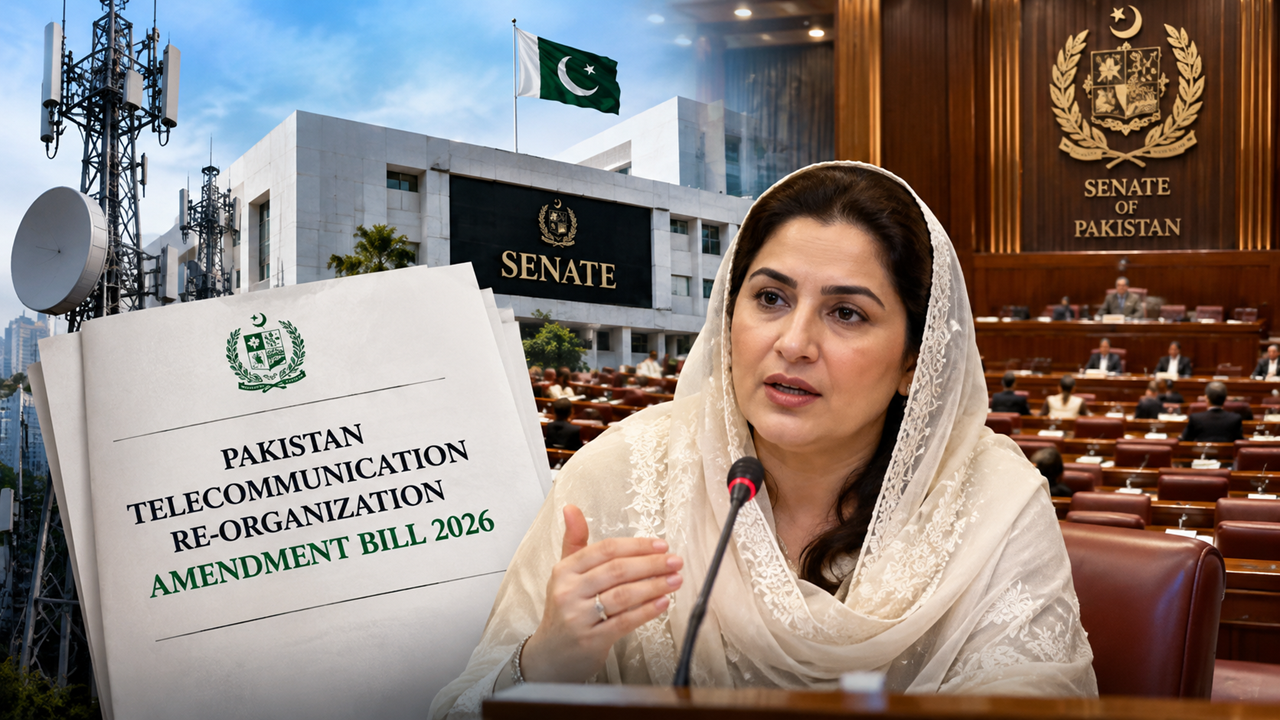
Pakistan’s Telecommunication (Re-Organization) Amendment Bill 2026 has returned to the Senate after the federal government withdrew its earlier version in August. The latest bill was introduced by Senator Samina Mumtaz Zehri as a private member’s bill and has been referred to the Senate Standing Committee on Information Technology and Telecommunication for further review.
The development brings Pakistan’s proposed telecom law reforms back into the parliamentary process. However, the bill’s reintroduction does not mean the proposed amendments have become law. The committee must examine the legislation, and further parliamentary steps may be required before it can take effect.
The bill is linked to broader efforts to improve Pakistan’s telecommunications infrastructure, streamline right-of-way procedures and support the expansion of fibre-optic networks and other telecom facilities. Its earlier version faced scrutiny over provisions concerning access to private property and the deployment of telecommunications infrastructure.
Telecom Amendment Bill Returns to the Senate
According to a report published by PhoneWorld on October 20, 2026, Senator Samina Mumtaz Zehri presented the latest version of the Pakistan Telecommunication (Re-Organization) Amendment Bill during a Senate session held on Private Members’ Day.
Private Members’ Day allows senators to introduce legislation independently rather than through the government. After its introduction, the Senate chairman referred the bill to the Senate Standing Committee on Information Technology and Telecommunication for examination.
The committee will review the proposed legislation and may discuss its provisions before recommending whether changes are needed. The bill’s referral is an early step in the legislative process, not a final approval.
The latest development follows months of debate over proposed amendments to Pakistan’s telecommunications regulatory framework. It also comes after the government decided to withdraw its earlier version and prepare a fresh bill to move the legislative process forward.
Why Was the Earlier Telecom Bill Withdrawn?
The federal government withdrew its previous version of the bill from the Senate on August 28, 2026. The Ministry of Information Technology and Telecommunication said the legislation was approaching the end of its prescribed 90-day period in the Senate.
The ministry explained that the bill could have proceeded to a joint sitting of Parliament after that period expired, potentially creating further delays. It therefore decided to introduce fresh legislation to continue the reform process through a new parliamentary route.
The earlier bill had already passed the National Assembly on June 11, 2026, before being presented in the Senate. It subsequently faced scrutiny over several provisions, particularly those dealing with right of way, telecom infrastructure and private property.
The government’s stated objective was to make the legislative process more efficient while retaining the main purpose of the proposed reforms. The reintroduction of a bill through a private member’s initiative represents a separate development in the ongoing parliamentary process.
What Is the Pakistan Telecommunication Amendment Bill About?
The proposed legislation concerns amendments to the Pakistan Telecommunication (Re-Organization) Act, 1996, which provides the legal framework for Pakistan’s telecommunications sector and the regulatory role of the Pakistan Telecommunication Authority (PTA).
The earlier version of the amendment bill focused on several areas, including telecom infrastructure deployment, right-of-way procedures, regulatory administration and dispute resolution.
Right of way refers to the legal permission or access required to install and maintain telecommunications infrastructure on or across land and property. Telecom operators need suitable access to deploy fibre-optic cables, network equipment and other facilities that support mobile and fixed internet services.
A clearer and more consistent framework could help address delays caused by complicated approvals, disputes over access and differences in administrative procedures.
However, the precise provisions of the newly reintroduced bill should be confirmed from its official text as it progresses through the Senate. The available report does not provide a complete clause-by-clause breakdown of the latest version.
Why Right-of-Way Rules Matter for Internet Users
Right-of-way rules can affect how quickly telecom companies expand and upgrade their networks. Fibre-optic infrastructure is an important part of modern telecommunications because it can provide the backhaul capacity needed to support mobile broadband, fixed internet and future network technologies.
When operators face prolonged delays in obtaining permissions, infrastructure projects may take longer to complete. Clearer procedures could help reduce administrative obstacles and improve coordination between telecom companies, property managers and relevant government authorities.
For consumers, improved infrastructure can potentially support better network capacity, wider service availability and more reliable connectivity. The actual benefits, however, would depend on how any new rules are written, implemented and enforced.
The bill should therefore be viewed as a proposed regulatory measure rather than a guarantee of faster internet or immediate improvements in mobile coverage.
Private Property Concerns Remain an Important Issue
One of the main challenges surrounding the earlier bill was the potential impact of right-of-way provisions on private property owners.
During the Senate committee’s review in June, lawmakers raised questions about how the proposed framework would apply to private land, telecom towers and other infrastructure installations. The Senate Standing Committee on IT and Telecommunication deferred further consideration and called for a review of provisions that could create uncertainty over property rights.
The Ministry of IT and Telecommunication previously maintained that the proposed framework did not authorize telecom operators to enter individual private property without the owner’s permission or due legal process.
These discussions highlighted the need to balance infrastructure development with legal protections for property owners. Any revised legislation will need to establish clear procedures for permissions, dispute resolution and the responsibilities of the parties involved.
The latest bill’s referral to the standing committee provides another opportunity for lawmakers to examine the proposed framework. Whether the new version addresses earlier concerns will depend on its actual wording and the committee’s deliberations.
What Role Will the Senate IT Committee Play?
The Senate Standing Committee on Information Technology and Telecommunication is responsible for examining the bill at the committee stage.
Its review may involve studying the proposed amendments, discussing their implications and considering whether particular clauses need clarification or revision. The committee can make recommendations as part of the parliamentary process.
This stage is important because telecommunications legislation can affect several stakeholders, including network operators, internet service providers, government authorities and private property owners.
A detailed review can help lawmakers assess how the proposed rules would operate in practice and whether they provide sufficient clarity on infrastructure access and regulatory responsibilities.
The bill’s future progress will depend on the committee’s consideration and the subsequent steps required under Parliament’s legislative procedures. No final approval should be assumed at this stage.
What Could the Bill Mean for Pakistan’s Telecom Industry?
Pakistan’s telecom industry depends on continued investment in network infrastructure to meet rising demand for mobile data, broadband services and digital connectivity.
A predictable regulatory framework could help companies plan fibre deployment and other infrastructure projects with greater certainty. Clear rules may also help reduce disagreements over permissions, fees and responsibilities.
At the same time, legislation that affects access to private and public property needs transparent safeguards and workable dispute-resolution procedures. Unclear provisions could create further uncertainty for both operators and property owners.
The central question is whether the reintroduced bill can establish a practical framework that supports network development while respecting existing legal rights.
Its impact will ultimately depend on the final provisions, their implementation and the cooperation of relevant federal, provincial and local authorities.
What Happens Next?
The immediate next step is consideration by the Senate Standing Committee on Information Technology and Telecommunication. The committee may examine the bill in detail and recommend changes before the legislation proceeds further.
As of October 20, 2026, the bill has been reintroduced in the Senate and referred to the committee. The available reporting does not establish that the latest version has completed the legislative process or become law.
Readers should watch for official updates from the Senate of Pakistan and the Ministry of IT and Telecommunication for information about committee meetings, proposed changes and any subsequent parliamentary decisions.
Conclusion
The reintroduction of the Pakistan Telecommunication Amendment Bill 2026 marks a new stage in efforts to revise the country’s telecom regulatory framework. Senator Samina Mumtaz Zehri has presented the bill in the Senate as a private member’s initiative, and it has been referred to the relevant standing committee for further review.
The legislation concerns important issues such as telecom infrastructure deployment, right-of-way procedures and regulatory administration. Its progress will be significant for an industry working to expand digital connectivity across Pakistan.
For now, the bill remains under parliamentary consideration. Its final provisions and legislative status will determine whether the proposed reforms can address infrastructure challenges while providing clear protections for property owners and other stakeholders.
Bir yorum bırakın
E-posta adresiniz yayınlanmayacaktır. Gerekli alanlar * ile işaretlenmiştir