


Unitree, Tesla, and Figure Push Humanoid Robots Toward Smarter, More Independent Work
Humanoid robots are advancing rapidly, with major robotics companies developing machines that can move more naturally, perform complex tasks, and operate with less human assistance. Recent developments from Unitree, Tesla, and Figure highlight how the industry is working toward robots that could eventually help with everyday household chores and industrial work.
From AI systems that help robots improve their own software to expanding production lines and more precise robotic hands, these advances suggest that practical humanoid robots are getting closer to real-world use.
Unitree Develops an AI System to Improve Humanoid Robots
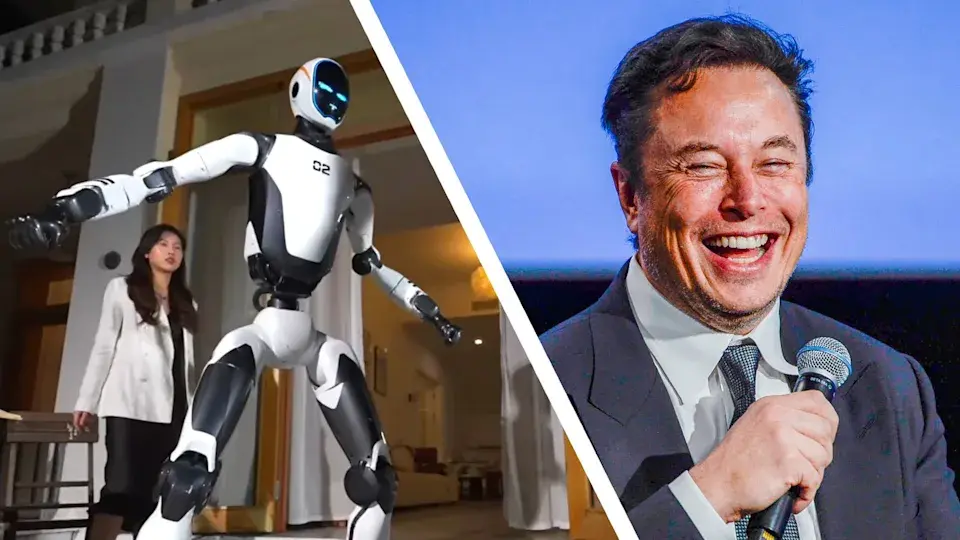
Unitree is reportedly developing an AI-powered system called Unitree Rehearsal that could help its humanoid robots improve their performance with less direct involvement from human engineers.
According to reporting by the South China Morning Post, the proposed system is designed to automate parts of the development process, including software creation, simulations, testing, and refinement. Rather than relying entirely on engineers to write code and fix problems manually, AI models could take on more of these repetitive tasks.
Unitree founder Wang Xingxing explained that increasingly capable AI models could handle more of the planning and testing required to improve robotics systems. Human feedback and performance evaluation would still play a role, but the broader objective is to make robot development faster and more automated.
This approach could help engineers develop and refine the algorithms that control humanoid robots in real-world environments. Wang has suggested that Unitree robots could begin handling tasks such as room cleaning as early as next year.
However, greater autonomy also raises questions about safety, transparency, and how engineers will monitor systems that can modify or improve their own software. The technology remains under development, and its practical capabilities will depend on how reliably it performs outside controlled testing environments.
Tesla Optimus Production Moves Forward
Tesla is also making progress with its humanoid robot program. According to reports covering the company's third-quarter 2026 shareholder update, production of the Tesla Optimus robot has begun at a facility in Fremont, California, following changes to the factory's production setup.
Elon Musk has discussed the possibility of increasing manufacturing capacity to approximately 20,000 robots per week by 2027. Reaching that level would require additional engineering work and a substantial expansion of production capabilities.
Despite the reported manufacturing progress, several technical challenges remain. Musk has acknowledged that Optimus still needs improvements in safety, reliability, and its ability to carry out different tasks independently.
A useful household robot must do more than perform a single demonstration. It needs to recognize its surroundings, understand what needs to be done, plan the necessary movements, and execute those actions consistently. Coordinating all these abilities remains a significant challenge for humanoid robotics developers.
Tesla's long-term ambition is to develop robots capable of performing useful work in factories and other environments. Whether Optimus can reach large-scale deployment will depend on continued progress in both its hardware and AI software.
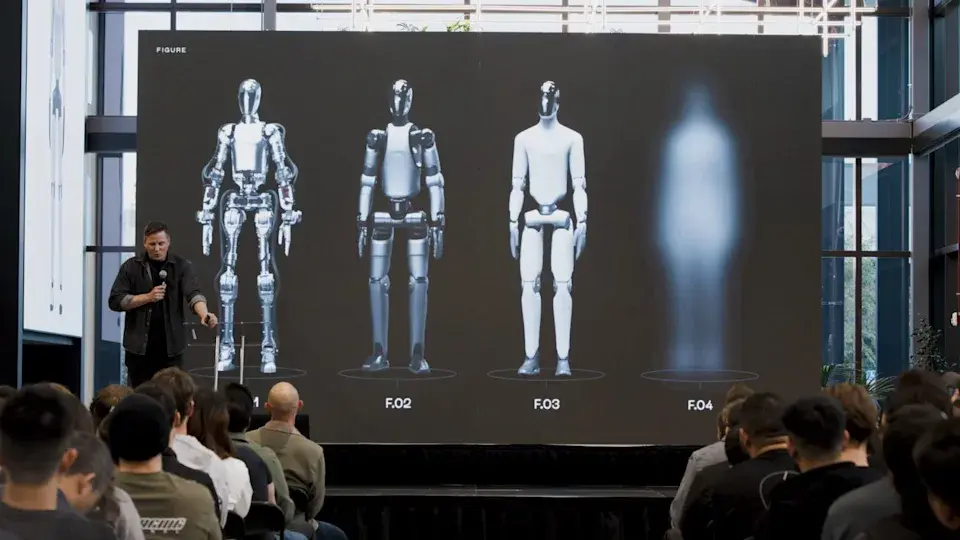
Figure Advances Toward Its Fourth-Generation Humanoid
Figure is pursuing similar goals, with CEO Brett Adcock reporting significant changes to the company's development plans over the past year.
The company is working toward its fourth-generation humanoid robot while reportedly expanding production of its Figure 03 model. These developments indicate that Figure is focusing on improving its robots while preparing for larger-scale manufacturing.
One important area of progress is robotic dexterity. Figure has highlighted fingertip tracking with millimeter-level precision, a capability that could help robots manipulate objects more accurately. Precise hand movements are essential for tasks such as picking up household items, handling tools, and performing work that requires fine motor control.
Figure is also collecting human activity data through its Index app. According to the reported update, the platform has received approximately 37.5 million videos. Such recordings can help train AI systems by providing examples of how people perform everyday activities.
The more useful and diverse the training data, the better researchers may be able to teach robots to recognize objects, coordinate movements, and respond to different situations. However, the quality of the data and the robot's ability to apply what it learns in unfamiliar environments remain important factors.
Figure Tests Robot Endurance
Durability is another major challenge for humanoid robots. Figure has reportedly demonstrated progress by running a Figure 03 robot on a treadmill for nine consecutive days at its headquarters.
The test provides an example of the company's efforts to evaluate endurance and stability over extended periods. Long-duration testing can help engineers identify mechanical weaknesses, software problems, and other issues that may not appear during short demonstrations.
Still, continuous treadmill operation is different from performing unpredictable tasks in a home or workplace. Real-world use requires robots to deal with changing surfaces, obstacles, objects, and situations while maintaining safe and reliable operation.
Can Humanoid Robots Handle Household Chores Soon?
The latest developments from Unitree, Tesla, and Figure point toward a future in which humanoid robots could assist with cleaning, organizing, material handling, and other repetitive tasks.
Each company is approaching the challenge differently. Unitree is exploring AI-assisted robot improvement, Tesla is working on production and independent task execution, and Figure is emphasizing dexterity, training data, and endurance.
These advances could eventually make robots more useful beyond factories and research laboratories. However, major challenges remain, including affordability, battery life, safety, reliability, and the ability to complete unfamiliar tasks without constant supervision.
Consumers may eventually be able to purchase humanoid robots to help with chores such as tidying rooms or doing laundry. For now, these possibilities remain dependent on further technological progress rather than guaranteed near-term features.
The coming years will show whether advances in AI, manufacturing, and robotic control can turn today's promising demonstrations into dependable everyday assistants.
Bir yorum bırakın
E-posta adresiniz yayınlanmayacaktır. Gerekli alanlar * ile işaretlenmiştir