

EA’s BioWare Problems Go Back Years: What Happened to the RPG Giant?
BioWare was once one of the biggest names in role-playing games, responsible for franchises such as Dragon Age and Mass Effect. But the studio's recent struggles have led to a much bigger question: did BioWare's problems begin long before its latest setbacks?
A new discussion surrounding the studio suggests that the answer may be yes.
Former BioWare producer Mark Darrah recently discussed the difficult development of Dragon Age: The Veilguard, including major changes in direction during production. His comments have renewed debate about how much of BioWare's decline can be attributed to the studio itself and how much came from decisions made by its management and parent company, Electronic Arts (EA).
Dragon Age: The Veilguard Had a Complicated Development
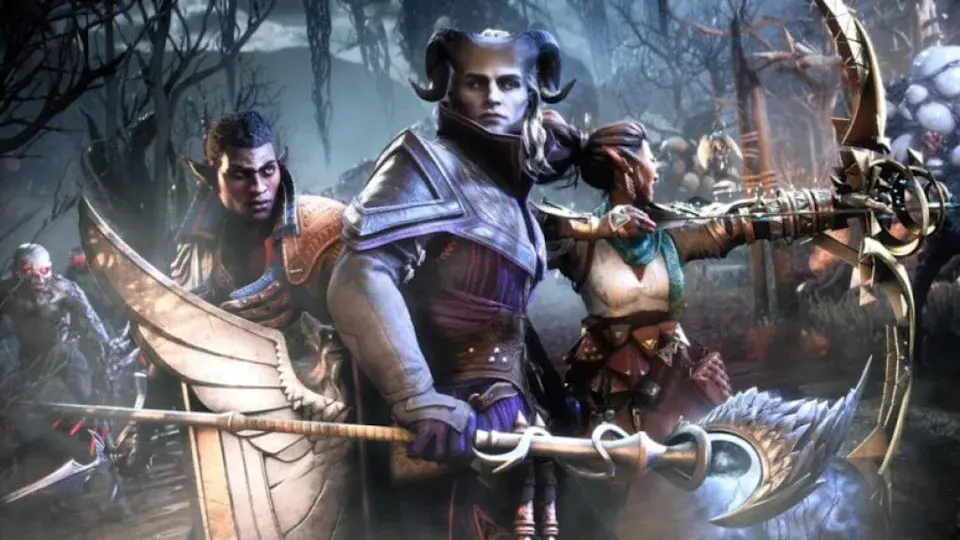
One of the biggest issues highlighted by Darrah was the changing direction of Dragon Age: The Veilguard.
According to the former producer, EA pushed the project toward a live-service model while the game was already in development. The project was later changed again to become a more traditional single-player Dragon Age experience.
The problem was that the development team did not necessarily receive enough time to completely remove the systems and design decisions left over from the live-service version.
That may help explain some of the creative choices that players noticed when The Veilguard eventually launched.
Some of Veilguard’s Design Choices May Have Older Roots
The Veilguard received attention for its more action-focused gameplay and simpler dialogue compared with some earlier Dragon Age games.
The article argues that at least some of these characteristics could be remnants of the earlier direction EA wanted for the project.
Instead of starting over after the change in strategy, BioWare reportedly had to reshape an existing project into something closer to the traditional Dragon Age formula.
That kind of development process can create a difficult compromise: a game may technically return to its original concept while still carrying design decisions from an earlier version.
BioWare’s Problems Didn’t Start With The Veilguard
Looking at BioWare's history makes the situation more complicated.
The studio produced some of the most influential RPGs of its era, including Mass Effect 2 and earlier Dragon Age titles. But over the years, several important creative figures left the company.
One notable example was writer Drew Karpyshyn, who worked on the original Mass Effect games. His departure before Mass Effect 3 became part of a broader period of change at the studio.
The loss of experienced developers does not automatically mean a studio is doomed, but repeated departures can make it harder for a developer to maintain the creative identity that made its games successful.
Mass Effect 3 Was Already Showing Warning Signs
Mass Effect 3 remains one of BioWare's most technically polished games, but its story generated significant controversy.
Players criticized several aspects of the narrative, including the handling of the Reaper storyline and the game's ending.
The game's reception became even more complicated because expectations were extremely high after Mass Effect 2.
Rather than simply viewing Mass Effect 3 as a bad game, however, the more interesting question is what its development and reception revealed about BioWare's changing creative direction.
Then Came Mass Effect: Andromeda
Mass Effect: Andromeda became another major turning point.
The game launched with technical problems and facial-animation issues that quickly became a major topic among players. Those problems overshadowed many of the game's other features and contributed to an extremely negative public reaction.
For a studio associated with polished storytelling and memorable characters, the launch was particularly damaging.
It also reinforced concerns that BioWare was struggling to maintain the standards associated with its earlier work.
Management May Have Been the Bigger Problem
The central argument isn't necessarily that every controversial BioWare game was poorly designed.
Instead, the larger issue may have been how projects were managed.
Repeated changes in direction can have a major impact on a game's development. When a studio is asked to transform an existing project into something fundamentally different, developers may have to spend significant time rebuilding systems instead of refining the core experience.
That's especially challenging for large RPGs, where story, combat, progression systems, characters and world design are deeply connected.
BioWare Was Once Known for Its Creative Identity
The contrast with BioWare's earlier years is striking.
Games such as Baldur's Gate, Star Wars: Knights of the Old Republic, Mass Effect and Dragon Age helped establish the studio as one of the industry's leading RPG developers.
These games were known for character-driven storytelling, meaningful choices and worlds that encouraged players to become emotionally invested.
Over time, however, the studio's identity became harder to define.
Instead of simply building on what made its games successful, BioWare increasingly found itself adapting to changing market expectations and corporate priorities.
The Live-Service Era Made Things More Complicated
The pressure to create live-service games became particularly significant across the games industry.
Publishers saw the potential for games that could keep players engaged for years through ongoing updates, expansions and monetization.
For a studio historically focused on narrative-driven single-player RPGs, however, moving toward that model represented a major creative shift.
The Veilguard appears to have experienced exactly this kind of tension, with its development direction changing before eventually returning toward a traditional Dragon Age experience.
EA’s Role Is Still Debatable
It would be too simplistic to claim that EA alone caused every problem at BioWare.
Game development is complicated, and BioWare itself made decisions that affected its projects.
However, the history described by former developers and the studio's changing priorities raise legitimate questions about how publisher expectations influenced development.
The important distinction is between saying EA destroyed BioWare and saying that some EA-era decisions may have contributed to the problems the studio experienced.
The second claim is much easier to support.
What Happened to BioWare’s Original Magic?
Perhaps the biggest loss is not a particular feature or franchise.
It's the sense that BioWare once had a very distinctive identity.
Players knew what they could expect from a BioWare RPG: strong companions, difficult decisions, deep relationships and stories that encouraged discussion long after the credits rolled.
Some of that identity remains, but the studio's recent history has made fans increasingly concerned about whether the BioWare of the past can return.
BioWare’s Future Could Still Change the Story
Despite everything, BioWare's history means the studio still has enormous goodwill among RPG fans.
Mass Effect and Dragon Age remain valuable franchises, and the right development strategy could potentially restore some of the confidence lost over the years.
But doing that may require more than simply releasing another successful game.
BioWare would need to rebuild its creative identity, give developers enough time to complete their vision and avoid repeating the cycle of constantly changing direction.
The studio's problems therefore cannot be reduced to one bad launch or one controversial decision.
BioWare's decline appears to have been a long process involving creative changes, developer departures, shifting business priorities and difficult management decisions.
That makes its future one of the more interesting stories to watch in the RPG industry.
Leave a comment
Your email address will not be published. Required fields are marked *