


Medical Students Should Learn Without AI, OpenEvidence CEO Warns
Artificial intelligence is changing how students study, research, and process information. However, the growing dependence on AI tools has raised concerns about whether future professionals are developing the knowledge and critical thinking skills needed to work independently.
Daniel Nadler, CEO of medical AI startup OpenEvidence, believes medical students should continue learning through traditional methods, even as AI becomes an increasingly important part of healthcare.
Speaking at Semafor's Silicon Valley & The World event, Nadler warned that relying too heavily on AI could prevent students from developing essential thinking abilities. He encouraged medical students to take paper-based exams, complete written tests, and thoroughly understand their subjects instead of allowing AI systems to do most of the intellectual work.
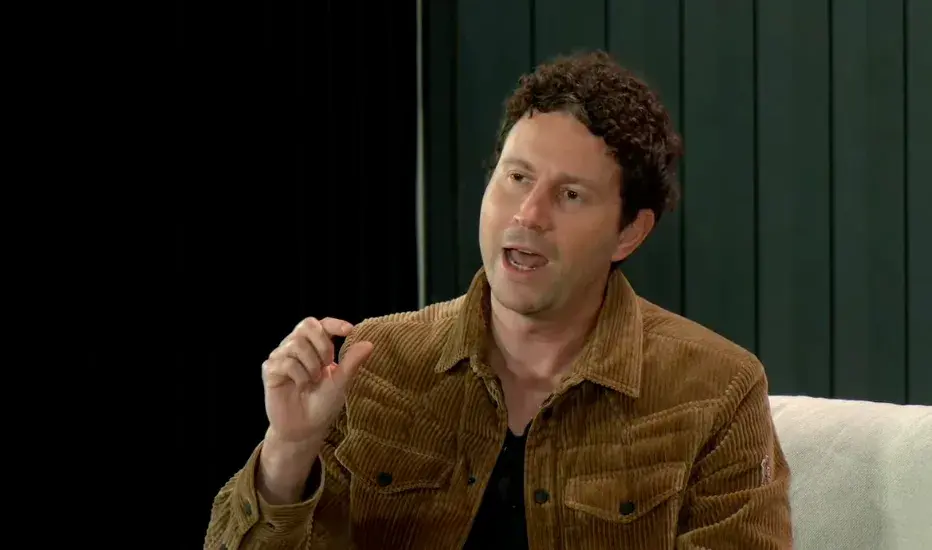
OpenEvidence CEO Raises Concerns About AI Dependency
OpenEvidence develops AI technology designed to help medical professionals understand complex medical information. Its platform draws on millions of medical research papers to provide physicians with accessible information.
Despite leading a company focused on medical AI, Nadler believes technology should support medical education rather than replace the learning process.
He highlighted a concern known as cognitive offloading. This happens when people depend on external tools to perform mental tasks that they would otherwise need to complete themselves.
For medical students, this could mean using AI to answer difficult questions, explain medical concepts, or solve clinical problems without first developing their own understanding.
Nadler believes this issue deserves particular attention among younger generations who have grown up with easy access to artificial intelligence.
Why Traditional Medical Exams Still Matter
Medical education requires more than memorizing information or finding quick answers online. Students must understand how diseases develop, recognize symptoms, evaluate evidence, and make decisions in situations where mistakes can have serious consequences.
Traditional examinations can help measure whether students genuinely understand the material without depending on digital assistance.
Paper-based tests and independent problem-solving also encourage students to recall information from memory and apply what they have learned.
This does not mean medical schools should reject AI technology. Instead, students should first establish a strong foundation of knowledge before using AI as a learning assistant.
AI Is Becoming a Powerful Tool in Healthcare
While Nadler warned about excessive dependence on AI, he also acknowledged the growing importance of artificial intelligence across different industries.
Medical AI platforms can help doctors review scientific research, organize complex information, and access relevant medical knowledge more efficiently.
The pharmaceutical industry is also exploring ways to use AI to accelerate drug development and reduce the time required for research.
Benjamine Liu, CEO of Formation Bio, highlighted the growing capabilities of AI systems during the same event. He explained that artificial intelligence is increasingly capable of handling work that previously required entire teams.
His comments demonstrate how rapidly AI is changing the healthcare and pharmaceutical sectors.
The Risk of Losing Critical Thinking Skills
One of the biggest concerns surrounding AI-assisted education is the possibility that students may become less capable of working independently.
When learners regularly receive ready-made answers, they may spend less time analyzing problems, questioning information, and developing their own solutions.
This concern is particularly important in medicine, where doctors must evaluate patients individually rather than simply follow automated recommendations.
AI systems can provide useful information, but they can also produce inaccurate or incomplete responses. Medical professionals need enough knowledge and experience to identify those problems before making decisions that affect patients.
Research published in Nature Medicine in 2026 has also discussed a related concern known as AI-induced never-skilling, in which students may fail to develop important abilities because technology performs those tasks for them.
Finding the Right Balance Between AI and Human Knowledge
The future of medical education will likely involve a combination of traditional learning and advanced AI tools.
Students can use artificial intelligence to explore difficult topics, practice clinical scenarios, summarize research, and receive additional explanations. However, these tools should complement classroom teaching, practical training, and independent study.
Medical schools also need to establish clear guidelines explaining when AI can be used and when students should demonstrate their abilities without technological assistance.
The goal should be to prepare doctors who understand both medicine and artificial intelligence, rather than professionals who depend entirely on automated systems.
Final Thoughts
Artificial intelligence has enormous potential to improve medical research and healthcare, but its growing influence also creates new challenges for education.
OpenEvidence CEO Daniel Nadler's warning highlights an important point: access to advanced technology does not automatically create expertise.
Future doctors must develop their own medical knowledge, reasoning abilities, and professional judgment before relying on AI for assistance.
As healthcare becomes increasingly technology-driven, the most capable professionals may be those who know how to combine artificial intelligence with strong human expertise.

Leave a comment
Your email address will not be published. Required fields are marked *