

Apple's first iPad was more than just a larger version of the iPhone. When Steve Jobs introduced the device in January 2010, he presented a new approach to personal computing that aimed to bring web browsing, entertainment, digital reading and everyday productivity together in one touchscreen device.
More than a decade later, the original iPad remains an important milestone in Apple's product history. Its launch helped establish the tablet market and influenced how people interact with portable computing devices.
Steve Jobs Introduced the First iPad in January 2010

Apple officially announced its first-generation iPad on January 27, 2010, at an event in San Francisco. Steve Jobs described it as a new category of device positioned between a smartphone and a traditional laptop.
At the time, smartphones were becoming increasingly popular, while laptops remained the primary choice for more demanding computing tasks. Apple believed there was room for a device that could offer a more comfortable experience for browsing websites, reading books, watching videos and using applications.
The original iPad went on sale in the United States on April 3, 2010, with a starting price of $499 for the 16GB Wi-Fi model.
Apple (IN)+1
Original iPad Specifications and Features
The first iPad featured a 9.7-inch LED-backlit IPS touchscreen with a resolution of 1024 x 768 pixels. Its large display was designed to make digital content easier to read and interact with compared with the smaller screens available on smartphones at the time.
Apple equipped the tablet with its custom-designed A4 processor, running at 1GHz. The device was available with 16GB, 32GB and 64GB of internal storage.
Other important specifications included:
Display: 9.7-inch Multi-Touch IPS screen
Resolution: 1024 x 768 pixels
Processor: Apple A4 chip
Storage: 16GB, 32GB and 64GB
Connectivity: Wi-Fi and optional 3G
Battery life: Up to 10 hours
Operating system: iPhone OS 3.2
Weight: Approximately 1.5 pounds (680 grams)
Charging connector: 30-pin dock connector
The tablet also included Bluetooth, a built-in microphone, speakers and an accelerometer that automatically adjusted screen orientation.
Apple claimed that the battery could provide up to 10 hours of use, making the device suitable for extended browsing, reading and entertainment sessions.
Apple (IN)+2
iPad Brought a Different Way to Use Apps and Digital Content
One of the biggest attractions of the original iPad was its touchscreen experience. Instead of relying on a traditional mouse and keyboard, users could navigate applications, scroll through websites, browse photographs and interact with content directly using their fingers.
Apple also introduced dedicated applications for the larger screen, including:
iBooks: For reading digital books through Apple's iBookstore.
Safari: For browsing websites.
Mail: For managing email on a larger display.
Photos: For viewing and organizing pictures.
iWork: Including Pages, Numbers and Keynote for productivity tasks.
Another important advantage was application compatibility. The original iPad could run many applications already available for the iPhone and iPod touch, giving users access to Apple's growing App Store ecosystem.
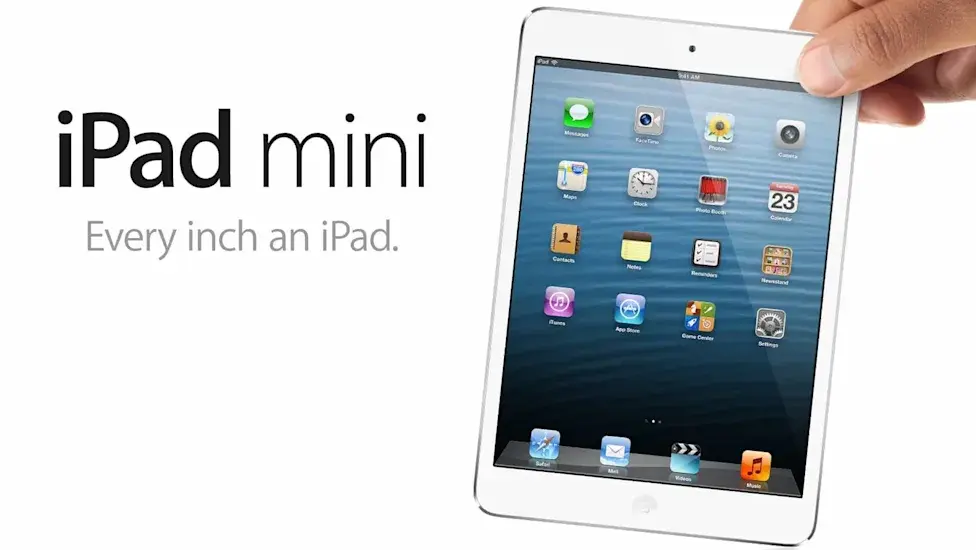
Why the Original iPad Was Different From Smartphones
Before the iPad arrived, most portable touchscreen experiences were built around relatively small smartphone displays. Apple wanted to make these activities more comfortable without requiring users to carry a conventional laptop.
The larger screen made reading electronic books, watching videos, viewing photographs and browsing full websites more convenient.
However, the first generation also had limitations. It did not include a built-in camera, lacked multitasking support at launch and did not support Adobe Flash. These missing features attracted criticism, particularly from users who expected a more complete laptop-like experience.
Despite those limitations, the iPad introduced a compelling alternative for everyday computing.
Original iPad Pricing and Availability
Apple launched the first-generation iPad with three storage configurations and separate Wi-Fi and Wi-Fi + 3G versions.
| Model | Original US price |
|---|---|
| 16GB Wi-Fi | $499 |
| 32GB Wi-Fi | $599 |
| 64GB Wi-Fi | $699 |
| 16GB Wi-Fi + 3G | $629 |
| 32GB Wi-Fi + 3G | $729 |
| 64GB Wi-Fi + 3G | $829 |
The Wi-Fi models became available on April 3, 2010, while Wi-Fi + 3G versions followed later that month.

The Beginning of Apple's Modern Tablet Journey
The original iPad laid the foundation for a product family that would expand into different screen sizes, performance levels and professional capabilities.
Over subsequent generations, Apple introduced improved processors, higher-resolution displays, cameras, better multitasking, Apple Pencil support and keyboard accessories.
The tablet gradually became useful for more than entertainment and reading. Students, professionals, artists and business users began adopting iPads for education, creative work and productivity.
The first-generation model may look basic compared with today's tablets, but its importance lies in the computing experience it helped popularize.
Final Thoughts
Apple's original iPad was an ambitious product that arrived at a time when touchscreen smartphones were changing consumer technology. Steve Jobs and Apple saw an opportunity to create something between a phone and a laptop, and the 2010 launch helped turn that idea into a major product category.
Although the first model had several hardware and software limitations, it established the foundation for the iPad lineup that continues to evolve today.
For technology enthusiasts, the original iPad remains an important reminder of how a new product category can influence the future of personal computing.
Tinggalkan komentar
Alamat email Anda tidak akan dipublikasikan. Kolom yang wajib diisi ditandai *