

Mohsin Naqvi Warns Women Against Sharing Photos Online Amid Rising Cybercrime
Interior Minister Mohsin Naqvi has urged women and girls in Pakistan to exercise greater caution when sharing personal photographs and videos online, warning that such material can be misused for harassment, blackmail and other forms of cybercrime.
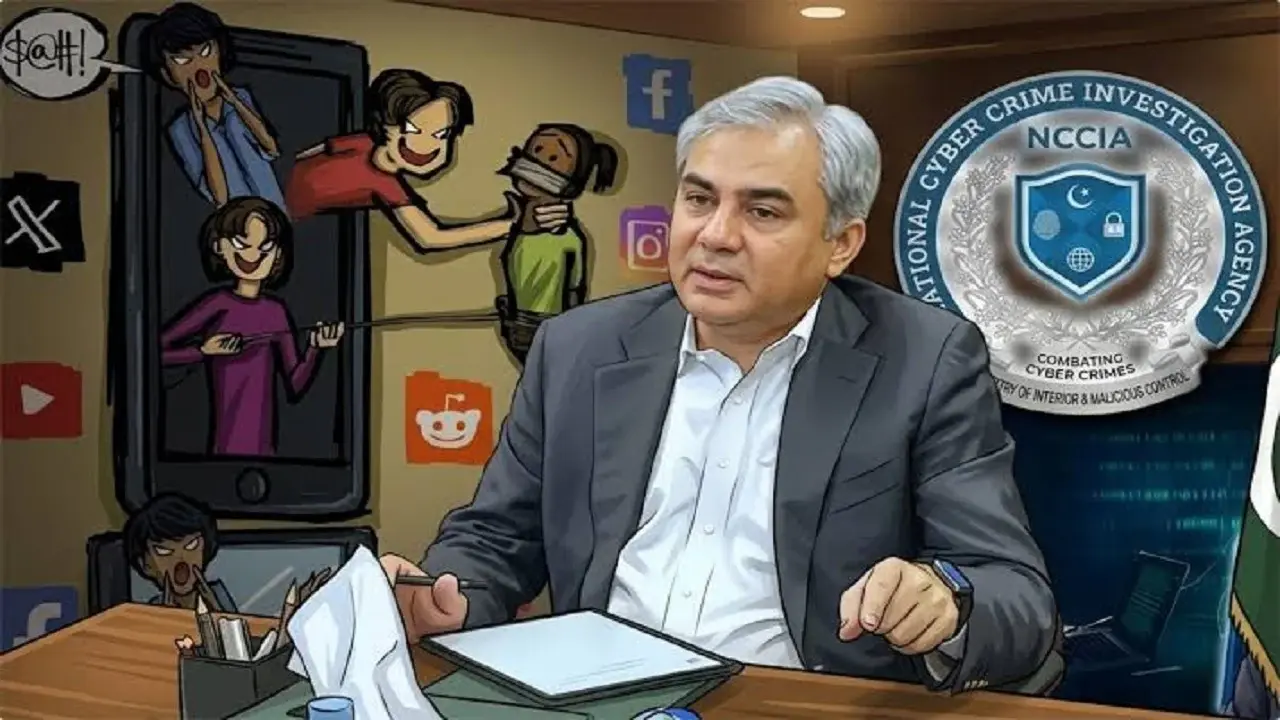
Naqvi made the remarks while speaking to journalists during an open court at the National Cyber Crime Investigation Agency (NCCIA) zonal headquarters in Lahore on October 23, where citizens, including women, brought forward complaints related to online harassment and cybercrime.
Warning Over Personal Photos and Videos
The interior minister specifically advised women not to share personal photographs with other people online, highlighting the risk that criminals may obtain images or videos through deception and later use them for blackmail or exploitation.
According to reports, the NCCIA is receiving a significant number of complaints involving the online harassment of women and girls. Naqvi said sensitive cases require a faster response from authorities rather than lengthy delays.
The warning comes as social media platforms have become an important part of everyday communication, increasing the importance of protecting personal information and digital accounts.
Fake Social Media Accounts Used for Fraud
Naqvi also warned citizens about fake social media accounts. Criminals can create false identities and use them to establish contact with victims, request money or collect personal information.
The minister advised people to verify the identity of anyone making suspicious requests online before sending money or sharing sensitive information.
He also warned about scams in which fraudsters pretend to be relatives, friends or people facing medical emergencies to convince victims to transfer money.
Public Warned About Online Money Scams
Online financial fraud was another major concern highlighted by the interior minister.
Citizens were advised not to send money simply because someone contacts them through social media or messaging platforms and claims to be sick or facing an emergency.
Users should independently verify such claims before making any payment, particularly when the request comes from an unfamiliar account or phone number.
Naqvi also cautioned against schemes promising to quickly double an investment or payment, which can be used to deceive unsuspecting victims.
NCCIA Facing Staff Shortage
The interior minister also highlighted staffing challenges at the National Cyber Crime Investigation Agency.
According to Naqvi, the NCCIA currently has only 61 personnel across Punjab, despite handling a large number of complaints. He said the government would raise the staffing issue with Prime Minister Shehbaz Sharif.
He also discussed plans to increase the agency's personnel and resources and expand its operational presence.
The staffing issue is particularly important for sensitive cybercrime cases, where victims may need immediate assistance and investigations can involve digital evidence that requires specialized expertise.
Government Plans Cybercrime Awareness Campaign
Naqvi said the government plans to launch an awareness campaign aimed at women, girls and the general public.
The campaign is expected to focus on recognizing online fraud, fake accounts, harassment, blackmail and other common digital threats.
Greater public awareness could help users identify suspicious behaviour before sharing personal information or transferring money to unknown individuals.
Authorities Taking Action Against Illegal Call Centres
The interior minister also highlighted enforcement operations against illegal call centres.
Reports indicate that hundreds of people have been arrested during recent operations targeting illegal call centres and activities associated with online fraud.
Authorities are also working to improve coordination with other institutions, including banks, in cases involving fraudulent financial transfers.
How Users Can Stay Safer Online
While authorities work to strengthen cybercrime investigations, internet users can take several basic precautions:
- Avoid sharing sensitive personal photographs or videos with people you do not fully trust.
- Never share passwords, PINs or verification codes with anyone.
- Verify unexpected requests for money through another trusted communication method.
- Be careful when communicating with newly created or suspicious social media accounts.
- Avoid investment offers that promise unusually quick or guaranteed returns.
- Keep social media privacy settings appropriately restricted.
- Save evidence such as messages, account details and screenshots if you experience online harassment or blackmail.
- Report serious cybercrime incidents to the relevant authorities.
Cybercrime Awareness Becoming Increasingly Important
The latest remarks from Mohsin Naqvi highlight growing concerns surrounding online harassment, cyber-blackmail and financial fraud in Pakistan.
The government has indicated that strengthening the NCCIA and increasing public awareness are important parts of its response. For users, protecting personal information and verifying suspicious online requests remain important steps toward reducing the risk of becoming a victim of cybercrime.
As more personal and financial activities move online, awareness about digital security is becoming increasingly important for everyone—not only women and girls.
Tinggalkan komentar
Alamat email Anda tidak akan dipublikasikan. Kolom yang wajib diisi ditandai *