

Elon Musk Mocks Sam Altman Over RAM Comments as AI Data Center Demand Sparks Debate
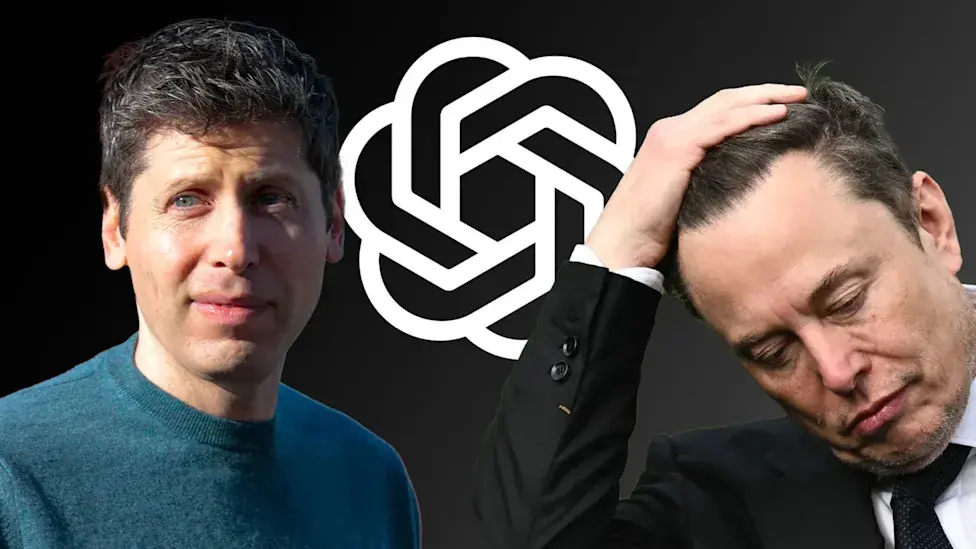
Elon Musk has publicly criticized OpenAI CEO Sam Altman after the latter questioned whether ordinary computer users should keep large amounts of RAM in their personal computers while artificial intelligence companies face growing memory shortages.
Musk responded to Altman's comments with a post on X, writing, "The people deserve to have their RAM too!" His reaction has added another chapter to the long-running rivalry between the two technology executives.
The disagreement comes at a time when rising demand for AI infrastructure is putting pressure on the global memory market, contributing to higher prices for computer components.
What Did Sam Altman Say About PC Memory?
During an appearance on the Cheeky Pint YouTube podcast, hosted by Stripe co-founder John Collison, Sam Altman discussed the growing interest in running AI models directly on personal computers.
Altman argued that keeping large amounts of DRAM in individual computers can be inefficient when that memory is used only occasionally.
He suggested that cloud-based AI infrastructure could make better use of limited memory resources because data center hardware can serve multiple users.
According to Altman, many personal computers have substantial amounts of RAM that remain unused most of the time, while AI companies need additional memory to operate increasingly demanding models.
Elon Musk Responds With a Message About RAM Ownership
Elon Musk was quick to react to Altman's position.
On November 1, Musk shared a meme mocking the idea that personal computer users should give up some of their RAM for better utilization in AI data centers.
He added the caption, "The people deserve to have their RAM too!"
The response attracted attention because Musk leads SpaceX and its AI business, making him a direct competitor to Altman's OpenAI.
Why Is RAM Becoming More Expensive?
The disagreement comes amid a growing global memory supply crunch.
AI companies are investing heavily in data centers that require enormous quantities of memory and other computing components. This demand is influencing how semiconductor manufacturers allocate their production capacity.
Several factors are contributing to pressure on the memory market:
Growing AI demand: Large AI models require substantial amounts of memory to process information.
Data center expansion: Technology companies are building infrastructure to support increasingly powerful AI services.
Limited manufacturing capacity: Memory manufacturers cannot instantly expand production to meet rising demand.
Consumer price increases: Higher component costs are affecting RAM kits, laptops, desktop computers, and other electronic devices.
Memory manufacturers such as Samsung and SK hynix have also warned about continuing supply constraints, with shortages potentially extending into 2027 and beyond.
Why OpenAI Wants More Memory in Data Centers
OpenAI operates cloud-based AI services that require powerful computing infrastructure. Instead of running every AI model directly on a customer's device, many of its services process requests through remote servers.
Altman's argument focuses on improving the utilization of available memory resources.
For example, a computer with 32GB of RAM might use only a portion of that memory during ordinary tasks. In a cloud environment, shared computing resources can potentially be allocated across multiple users and workloads.
However, this approach also raises questions about consumer choice, hardware ownership, privacy, and dependence on cloud services.
Users who prefer running AI models locally may want powerful computers with enough RAM to operate those models without relying entirely on external servers.
Musk and Altman Have a Long History of Disagreements
The latest exchange is another development in the complicated relationship between Musk and Altman.
Both executives helped establish OpenAI in 2015 as a nonprofit artificial intelligence research organization. However, disagreements over leadership, funding, and the company's future direction eventually led Musk to leave the organization in 2018.
Musk later established xAI, which developed the Grok AI chatbot to compete with products such as ChatGPT.
Their disagreements have also extended into legal disputes and public criticism on social media.
What This Means for PC Users
The debate highlights a growing conflict between the needs of AI infrastructure providers and everyday computer users.
Cloud-based AI services benefit from large, shared computing systems, while local AI enthusiasts want more powerful personal hardware.
If memory supplies remain constrained, consumers could continue facing higher prices for RAM and other computer components.
For now, Musk and Altman have presented different perspectives on how limited memory resources should be used. The larger question is whether the rapid expansion of AI infrastructure will make powerful computing hardware less affordable for ordinary consumers.
Lascia un commento
Il tuo indirizzo email non sarà pubblicato. I campi obbligatori sono contrassegnati con *