

Topstar Unveils Star, a Full-Size Humanoid Robot Designed for Factory Work
Chinese industrial robotics manufacturer Topstar has introduced Star, a full-size bipedal humanoid robot designed to handle materials, sort products and perform other tasks in factory environments.
The company unveiled the robot during its TOPS DAY open-day event on November 7, 2026. Standing 172 centimetres tall and weighing 72 kilograms, Star is designed to operate in existing manufacturing facilities without requiring major changes to factory layouts.
The launch also included the S400, a five-axis machine tool developed by Topstar's machine-tool subsidiary to manufacture components for humanoid robots.
The two products reflect Topstar's broader strategy of combining artificial intelligence with industrial automation while supplying equipment to companies developing next-generation robots.
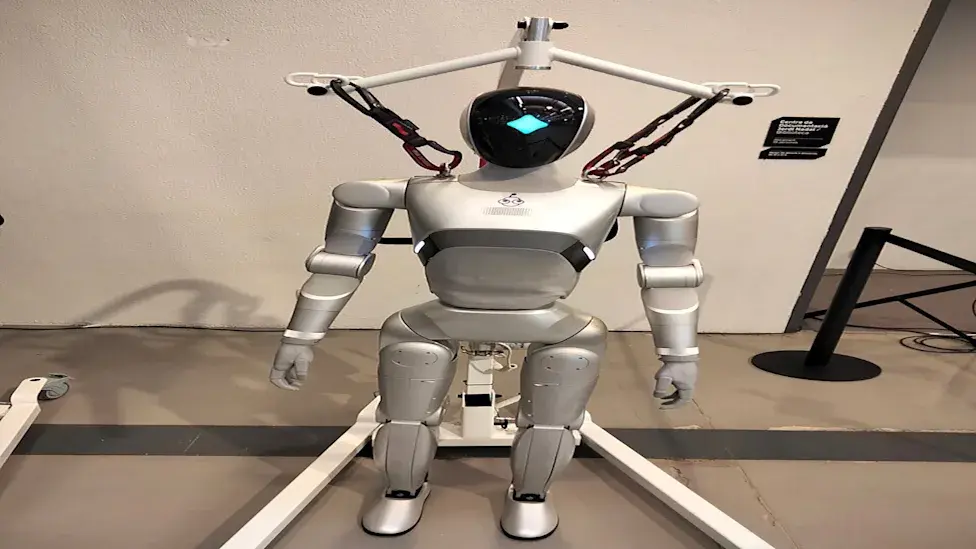
Star Humanoid Robot: Key Specifications
Star is a full-size, two-legged robot built around a dual-arm configuration. According to Topstar, its arms feature seven degrees of freedom, allowing each arm to move along seven independent axes.
Its main specifications include:
Height: 172 centimetres (5 feet, 8 inches).
Weight: 72 kilograms (159 pounds).
Arm configuration: Two arms with seven-axis movement each.
Combined payload: 10 kilograms (22 pounds).
Design: Full-size bipedal humanoid.
Intended applications: Factory material handling, product sorting and multi-step manufacturing tasks.
The seven-axis arm design gives Star additional movement flexibility for handling objects and performing operations that require more complex positioning. Its combined payload of 10 kilograms is intended to support material-handling activities in industrial environments.
However, Topstar has not yet published detailed performance figures covering the robot's walking speed, battery life, operating time or commercial price.
Designed for Material Handling and Product Sorting
Topstar says Star was developed specifically for industrial environments rather than general-purpose household use. Its primary focus is helping factories automate repetitive physical tasks that traditionally require human workers.
The company has identified three major application areas for its embodied AI development:
Small-batch, high-variety sorting: Handling different types of products and components in manufacturing environments.
Multi-step operations: Performing tasks that involve several connected actions rather than a single repetitive movement.
Intelligent material handling: Moving components and materials between different production stages.
One notable design feature is Star's cross-shaft wrist mechanism. Topstar says this design allows the robot to reproduce working postures commonly used by factory employees.
The company also claims that Star can fit into existing factory layouts without requiring manufacturers to completely redesign their production lines. This could make the robot easier to integrate into facilities that already use conventional industrial equipment.
Star Can Collect Data From Real-World Factory Environments
Another important part of Star's development is its ability to collect physical-environment data while performing tasks.
Topstar plans to use this information to improve the robot's capabilities over time. The approach is connected to the concept of embodied AI, in which artificial intelligence operates through a physical machine and learns from interactions with real-world environments.
The company says Star uses high-precision joint modules in its arms and wrists to support accurate movements during industrial operations.
Topstar's robotics team has also been working on practical manufacturing applications. According to reports about the TOPS DAY event, the team completed more than 30 scenario and task validations over the previous year.
However, these validations should not be confused with confirmed commercial deployments of Star itself. The company has not published production results demonstrating how many Star robots are currently operating in customer factories.
Topstar Appoints Embodied AI Chief Scientist and Expands Research Partnerships
Alongside the robot launch, Topstar announced further steps to strengthen its research capabilities.
The company appointed David Navarro, a professor at Hong Kong Polytechnic University, as its chief scientist for embodied AI.
Topstar also established joint robotics laboratories with Great Bay University and Nanchang University. These partnerships are intended to support research and development in industrial robotics and embodied intelligence.
Navarro's presentation at the event focused on the transition from conventional AI-driven robotics towards physical intelligence, where machines can interact more effectively with real-world environments.
These collaborations suggest that Topstar wants to build its humanoid robotics business around more than mechanical hardware, with software, data collection and research also playing important roles.
Topstar also introduced the S400, a five-axis CNC machine developed by its controlled machine-tool subsidiary, Evermi.
The machine is designed to manufacture complex components used in humanoid robots, including joints, arm links and structural housings.
Unlike conventional three-axis CNC equipment, five-axis machines can move a cutting tool or workpiece along additional rotational axes. This allows manufacturers to machine complicated curved surfaces and geometries with greater flexibility.
The S400 is being positioned as a solution for producing humanoid robot components with high precision and consistency, particularly when manufacturers need to increase production volumes.
This is an important part of the humanoid robotics supply chain because robot manufacturers need accurately machined components to build reliable joints, arms and structural assemblies.
Manufacturers Are Already Showing Interest in Topstar's S400
Topstar's machine-tool business is not starting from scratch. The company already supplies CNC machine tools and injection-moulding equipment to industrial customers.
According to reports from the TOPS DAY event, Zhejiang Leiwang Technology agreed to purchase five-axis machines from Topstar's subsidiary for manufacturing humanoid robot components.
Another company, Guangdong Levi, reportedly purchased 100 five-axis machines from the subsidiary beginning in 2023 for humanoid robotics component production.
These reported orders highlight the growing demand for precision manufacturing equipment as companies expand their humanoid robot development and production activities.
However, these machine-tool purchases should be viewed separately from Star's commercial progress. They demonstrate interest in Topstar's manufacturing equipment, not confirmed customer orders for its newly introduced humanoid robot.
Topstar's Strategy: AI Serving AI
Topstar founder Wu Fengli described the company's broader approach as "AI serving AI."
The strategy involves using artificial intelligence to improve Topstar's own industrial equipment while also supplying the manufacturing technologies required by companies building AI hardware and robots.
Topstar already operates in several industrial equipment categories, including:
Injection-moulding machinery.
CNC machine tools.
Industrial robots.
Automation systems.
Humanoid robotics manufacturing equipment.
By combining these businesses, Topstar aims to participate in different stages of the AI manufacturing ecosystem.
Its Star humanoid represents the company's move towards full-size bipedal industrial robots, while the S400 strengthens its position in the precision-machining equipment market.
The approach could give Topstar opportunities in both robot development and the manufacturing infrastructure needed to produce robotic hardware at scale.
Star's Commercial Availability and Performance Remain Unconfirmed
Despite the announcement, several important details about Star remain unknown.
Topstar has not disclosed the robot's retail price, expected customer availability, battery capacity, operating time or walking speed. The company has also not announced confirmed customer deployments for the newly unveiled bipedal model.
This means it is still too early to determine how Star will perform in demanding factory environments or whether it can compete commercially with established industrial humanoid robot developers.
Other companies, including UBTech, are already exploring humanoid robots for manufacturing applications. For example, UBTech and Volkswagen have been testing humanoid robots in factory environments.
Topstar will need to demonstrate reliable operation, practical productivity improvements and commercial deployments before Star can establish itself as a serious competitor in the industrial humanoid robotics market.
Final Thoughts
Topstar's introduction of Star marks an important expansion of its industrial robotics portfolio. The 172-centimetre humanoid combines seven-axis arms, cross-shaft wrists and a 10-kilogram dual-arm payload to target material handling and product sorting in manufacturing facilities.
The simultaneous launch of the S400 five-axis CNC machine also highlights the company's interest in the manufacturing infrastructure behind humanoid robotics.
However, Star's real-world performance and commercial availability remain unproven. Its success will ultimately depend on how effectively it performs factory tasks, integrates into existing production lines and delivers measurable value to manufacturers.
For now, Topstar's announcement shows how the company is positioning itself to participate in the growing industrial humanoid robotics market through both robot development and precision manufacturing technology.
Lascia un commento
Il tuo indirizzo email non sarà pubblicato. I campi obbligatori sono contrassegnati con *