

Meta Tests Charging Government and Nonprofit Facebook Pages for Sharing Links
Meta is testing a major change to Facebook that could make it harder for some government agencies and nonprofit organizations to share links in their posts without paying for a subscription.
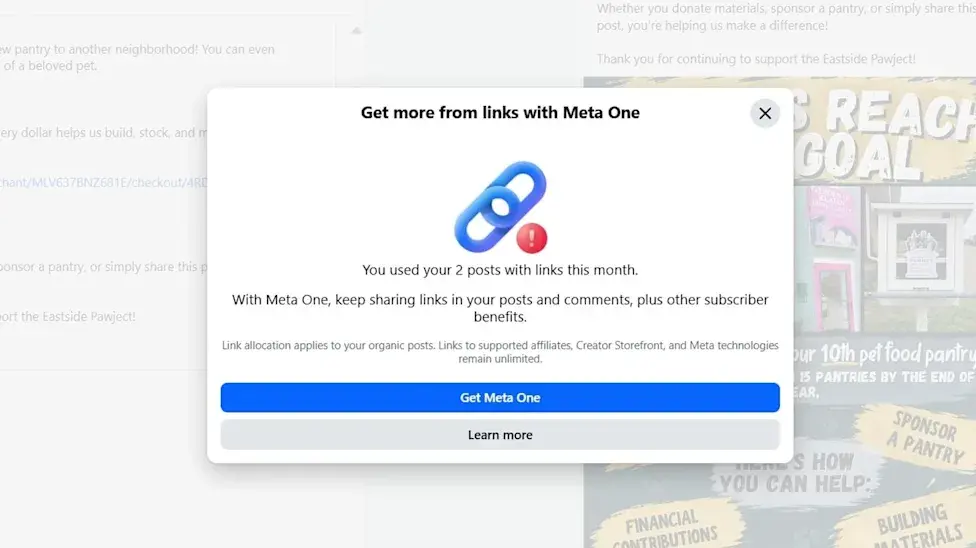
Under the ongoing experiment, some Facebook Pages have reportedly been limited to just two posts containing external links per month. Pages that want to share additional links may be prompted to subscribe to a paid Meta plan.
The development is particularly concerning for nonprofits and government organizations that use Facebook to direct people to official websites, donation pages, volunteer forms, public services and event information.
Facebook Link Sharing Could Become a Paid Feature
Meta has been testing whether sharing external links on Facebook should become part of its paid subscription offerings.
The company says the experiment is not intended to target government or nonprofit Pages. However, several organizations have reported receiving the new restrictions despite identifying themselves as nonprofits or government entities.
One example involves a public library in Greenville, Texas. The library's Facebook Page reportedly received a notification saying it could add links to only two posts per month. Once that limit was reached, the Page was encouraged to subscribe to a Meta One plan to continue sharing links.
For organizations that depend heavily on Facebook, the change could create significant problems.
Why Government Pages Are Concerned
Government agencies often use Facebook to communicate important information to residents.
A Facebook post may link users to an official website for public announcements, library information, service updates, forms, schedules or emergency information.
Daniel Starks, who manages several Facebook Pages for the city of Greenville, said a large portion of the city's Facebook communication involves directing residents to information hosted on its website.
Because of the restrictions, the city began considering alternatives such as placing URLs in comments rather than directly inside Facebook posts.
The situation highlights a potential problem for government organizations: unlike businesses, they may not be able to easily justify paying a monthly subscription simply to share official web links.
Nonprofits Are Also Reporting Restrictions
Nonprofit organizations have also reported encountering Facebook's link-sharing limits.
Small nonprofits frequently rely on Facebook to reach supporters, promote fundraising campaigns, recruit volunteers and direct people toward donation or information pages.
For example, Indianapolis-based nonprofit East Side Pawject reportedly encountered the two-link limit while trying to promote an event. The organization uses Facebook to help people find pet food pantries, locate donation opportunities and learn how to support its work.
The organization was reportedly offered a paid subscription that would increase the number of links it could share each month.
For smaller nonprofits operating with limited budgets, paying a substantial monthly fee just to share website links can be difficult to justify.
Meta One Plans Offer More Link-Sharing Capacity
Meta has been incorporating link-sharing benefits into its paid subscription strategy.
According to current reports, different Meta One subscription levels offer different numbers of Facebook link posts. The reported plans include a roughly $50-per-month option with eight Facebook links, a $150-per-month option with 20 links, and a higher-priced plan offering unlimited links.
Pricing and availability can vary, and the restrictions are still part of an ongoing test.
The basic issue for organizations is that a feature that has traditionally been a normal part of Facebook publishing could increasingly become connected to paid subscriptions.
Some Organizations Are Looking for Workarounds
Organizations affected by the test are already exploring different ways to continue communicating with their audiences.
Some are placing website URLs in Facebook comments instead of the main post. Others are considering creating more Facebook Events or asking employees, volunteers or board members to share links from personal profiles.
However, these approaches are not perfect.
A government department may need to publish an official link from its own verified Page, while a nonprofit may need to send supporters directly to a donation or registration page.
Moving these links elsewhere could make the communication process less convenient and potentially reduce the number of people who click through.
Meta Says the Experience Is Still Being Tested
Meta has confirmed that it is experimenting with whether link sharing should be included as part of its subscription offerings.
The company has said that it will continue to adjust the experience based on feedback and what it learns from the test.
However, questions remain about why some government and nonprofit Pages are reportedly being affected when the test is not supposed to target those organizations.
Reports also indicate that the experience is not consistent across every Page. Some organizations have been able to share links again after previously encountering restrictions.
Why This Could Matter for Facebook Pages
The potential change is significant because external links are an important part of how organizations use social media.
A nonprofit might use Facebook to send supporters to a donation page. A city might direct residents to an official government website. A library might link to its event calendar, while a community organization could send followers to a registration form.
If these organizations are limited to only a small number of external-link posts each month, they may need to rethink their Facebook strategy.
It could also encourage organizations to invest more heavily in channels they control directly, including websites, email newsletters and messaging platforms.
Meta's Growing Push Toward Paid Features
The link-sharing experiment is part of Meta's broader strategy of expanding subscription-based features across its platforms.
Meta has increasingly explored ways to offer additional capabilities through paid services while continuing to operate Facebook and Instagram as free-to-use platforms.
For organizations that depend on social media for outreach, these changes demonstrate the risks of relying too heavily on a single platform.
What Happens Next?
It remains unclear whether Meta will eventually expand the link-sharing restrictions to more Facebook Pages or change the rules following feedback from users.
For now, the company continues to describe the feature as a test.
Government agencies and nonprofit organizations affected by the restrictions may need to monitor their Pages closely and develop alternative ways of directing followers to important online resources.
If Meta eventually makes paid link sharing a permanent feature, organizations that depend heavily on Facebook traffic could face a difficult choice between paying for additional link-sharing capacity or shifting more of their audience communication to other platforms.
Leave a comment
Your email address will not be published. Required fields are marked *