


National CERT Warns Pakistani Organizations of Cyberattacks Through Third-Party Vendors
SEO Title: National CERT Warns Pakistan Organizations of Third-Party Cyberattacks
Meta Description: Pakistan’s National CERT has warned public and private organizations about cyberattacks through third-party vendors and urged stronger vendor security controls.
Focus Keyword: National CERT third-party cyberattack warning Pakistan
URL Slug: national-cert-third-party-cyberattack-warning-pakistan
Tags: National CERT Pakistan, Cybersecurity Pakistan, Third Party Cyberattacks, National CERT Warning, Cybersecurity Threats Pakistan, Vendor Security, Supply Chain Security, Cyber Attacks, Data Security, Pakistan Cybersecurity, Cloud Security, Technology News
Pakistan’s National Computer Emergency Response Team (National CERT) has issued a new cybersecurity advisory warning organizations about the growing risk of cyberattacks originating through third-party vendors, suppliers and external service providers.
The warning applies to both public and private-sector organizations. National CERT highlighted that companies and government institutions can remain exposed to cyber threats even when their own internal security systems are well protected if a connected vendor has weak cybersecurity controls.
Third-party companies often receive access to organizational networks, applications, cloud platforms, sensitive information and security credentials. If those access points are compromised, attackers could potentially use them as a pathway into the larger organization.
Why Third-Party Vendors Are Becoming a Cybersecurity Concern
Modern organizations increasingly depend on external technology providers for essential operations.
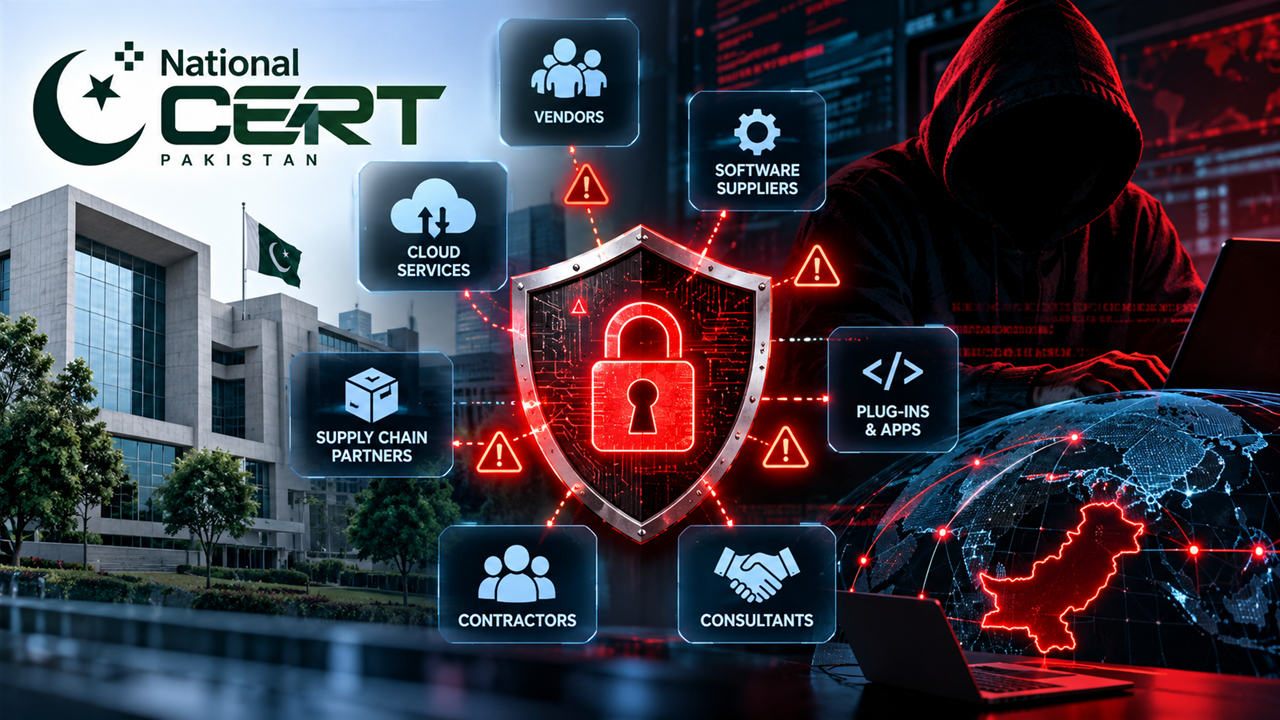
These relationships can include:
- Cloud service providers
- Software vendors
- Third-party applications
- Plugins and digital tools
- IT contractors
- Consultants
- Manufacturers
- Distributors
- Supply-chain partners
- Managed service providers
While these services can improve efficiency and reduce operational costs, they also create additional connections that organizations must secure.
National CERT warned that attackers may deliberately target smaller vendors or business partners because they may have weaker security protections than the larger organization they serve.
Once a vendor's systems are compromised, attackers could potentially attempt to abuse legitimate access to reach connected systems or steal sensitive information.
Attackers Could Target Trusted Connections
One of the biggest concerns highlighted by the advisory is that organizations cannot focus only on their own network perimeter.
A company may have firewalls, endpoint protection, monitoring systems and other security measures in place, but a compromised external provider could introduce another route into its digital environment.
For example, an organization may provide a software company with access to an internal system for maintenance. If that vendor account is compromised, attackers could potentially attempt to use the same credentials or connection to move deeper into the organization's infrastructure.
This makes third-party risk management an increasingly important part of cybersecurity.
Sensitive Data Can Also Be Exposed
Third-party relationships can involve the sharing of confidential information.
Depending on the service being provided, external companies may handle business records, customer information, employee data, credentials or other sensitive material.
National CERT's warning highlights the importance of ensuring that organizations understand what information is being shared with vendors and how that information is protected.
Weak security practices at an external provider could create risks for the organization that originally collected or controls the information.
Software and Cloud Services Need Extra Attention
The cybersecurity risk also extends to software applications, plugins and cloud-based platforms.
Organizations frequently connect multiple applications and online services to their internal systems. These connections can increase productivity, but they also expand the overall attack surface.
If a third-party application contains an unpatched vulnerability or is given excessive permissions, attackers could potentially exploit the weakness to gain unauthorized access.
For this reason, organizations should regularly review which external applications have access to their systems and whether those permissions are still necessary.
National CERT Recommends Five Security Measures
National CERT has outlined several measures organizations can take to reduce third-party cybersecurity risks.
1. Enforce Security Requirements
Organizations should establish clear cybersecurity requirements for external vendors and service providers.
Contracts and agreements with third parties should include appropriate security responsibilities and controls.
2. Assess Vendors Before Giving Access
Organizations should evaluate a vendor's cybersecurity practices before allowing it to access internal systems or sensitive information.
This assessment can help identify potential weaknesses before a business relationship creates additional security exposure.
3. Limit Third-Party Access
External providers should receive only the permissions required to perform their assigned tasks.
Giving vendors unnecessary access can increase the potential impact if an account or system is compromised.
The principle of least privilege can help organizations reduce this risk.
4. Monitor Vendor Activity
Organizations should continuously review third-party access and activity where appropriate.
Monitoring can help identify unusual behavior, unauthorized access attempts or other indicators of a possible security incident.
5. Review Incident Response Plans
Companies and government institutions should regularly review their cyber incident reporting and response procedures.
If a vendor suffers a security breach, organizations need a clear process for communicating with the provider, assessing the impact and taking appropriate defensive measures.
Third-Party Security Is Part of Overall Cybersecurity
National CERT's warning highlights an important change in how organizations need to approach cybersecurity.
Security is no longer limited to protecting an organization's own servers, computers and networks. Digital businesses are connected to numerous external services, meaning weaknesses in one part of the technology ecosystem can potentially create risks elsewhere.
Pakistan has also been strengthening its national cyber monitoring capabilities. In August 2026, the government inaugurated the National Cyber Security Operations Centre (NCSOC) at National CERT to improve capabilities for monitoring, detecting and responding to cyber threats in real time.
The latest advisory adds another layer to this broader cybersecurity effort by emphasizing the security of external partners and suppliers.
What Pakistani Businesses Should Do
For businesses operating in Pakistan, the advisory provides a reminder to review their current vendor relationships.
Organizations should consider maintaining an updated inventory of third-party providers and identifying which vendors have access to sensitive systems or information.
They should also regularly review access permissions, security requirements, software integrations and incident-response procedures.
Companies handling customer or financial information may need particularly strong controls because a third-party breach could potentially expose sensitive data.
Organizations should also avoid assuming that a vendor is secure simply because it is an established company. Vendor security should be evaluated as an ongoing process rather than a one-time check.
Third-Party Cybersecurity Risks Are Increasing
As organizations increasingly rely on cloud computing, outsourced IT services, software integrations and digital supply chains, third-party cybersecurity risks are becoming more difficult to ignore.
National CERT's latest warning underlines the need for Pakistani organizations to look beyond their own infrastructure and evaluate the security of the companies and technologies connected to it.
Strong vendor requirements, limited access permissions, continuous monitoring and effective incident-response plans can help organizations reduce their exposure to attacks that originate outside their own networks.
For businesses and government institutions, protecting the digital supply chain is now an important part of protecting the organization itself.
Source: National CERT advisory as reported by PhoneWorld.
Suggested Image Alt Text: National CERT Pakistan warns organizations about third-party cybersecurity risks
Bing SEO Tip: Use the exact focus keyword “National CERT third-party cyberattack warning Pakistan” naturally in the introduction, one H2 heading, meta description and image alt text. Avoid repeating it unnaturally throughout the article.
Bir yorum bırakın
E-posta adresiniz yayınlanmayacaktır. Gerekli alanlar * ile işaretlenmiştir